Although not all, the vast majority of western Christians today have the cemented-in mindset that ‘church’ is largely what happens in certain, mostly bespoke, buildings, generally on Sundays. Further, the main Christian activity of most (when measured by time) is something called ‘going to church’, again generally on Sunday.
This is because centuries of living in a Christianized society has conditioned church members to this mindset. Yet is not the mindset taught in the Bible which does not mandate any particular ‘Form’ for Christian assembly or ministry, rather it gives us basic principles for those things. Very importantly, in the context of the chronic Missional Malaise of the western church, nor is it the model that we see in the New Testament, or what has been the case at various times and in various places in history, including today.
Several examples, among large numbers of others that could be cited, both historical and contemporary, can be used to make the point.
The Early Church
It is easy to read the word ‘church’ in the New Testament through the lens of the prevalent western Sunday-centric gatherings in sizeable buildings that we are used to. However, in Biblical times ‘churches’ were basically networks of House Churches which formed a powerful missional movement that swept through most of the Roman Empire, in fact up and until the Emperor Constantine in the fourth century AD.
However, a fact relevant to the current Missional Malaise, as Larry Kreider reminds us, is that-
“Periodically, down through the ages, the church has lost the New Testament component of meeting in small groups and has placed an emphasis on the church as it meets in large buildings.
That is where, for the most part, the western church is today, despite there being no Biblical or strategic argument that demands our current large-church model has to be the way ‘church is done’.
The Celts
It is in the area of culturally appropriate mission that the northern European Celtic missional movements of the 5th and 6th centuries can be usefully explored.
One particular example of Celtic mission from which the modern ‘Church’ (I use the word in the broad sense) can learn a great deal, is the mission of St Patrick in the 5th century AD. Patrick’s missionary efforts were largely to Ireland (although he was in fact English), but the effect of them was far wider than that for he inspired the great Celtic missional movement across the northern British isles in the following centuries led by such people as Columba. It is important to note that the missional mind-set of the Celts was entirely different to that of contemporary western churches.
Several principles adopted by the Celtic mission to a pagan, spiritually pluralistic society with much in common with ours, can, and in fact should, be applied to our mission to western society. Here are five that have (or should have) high relevance to formulating our missional strategies.
- Mission is a Team Activity.
The first point to be learned from the Celts is that Mission was a ‘team’ activity done by groups working together. They did not generally engage in ‘one to one’ evangelism or use individual evangelists (such as chaplains) working alone.
2.Mission is Centrifugal.
That is, it is essentially an outward activity, not the ‘bringing people in’ (to our churches) characteristic of the missional activities of western churches. Mission means ‘Going and Staying’ (Matthew 28:19). Celtic Missional Teams went out, embedded themselves in and stayed in pagan communities. This did not involve attempts to draw the pagans into formal religious services at another location.
3. Mission involves Word and Deed.
The Celtic Missionary groups didn’t just proclaim the Gospel with words but engaged in the lives of the non-Christian communities by modelling Christ, providing support and service (i.e God’s love) as opportunities presented themselves, so they were ‘Looked on with favour’ (Acts 2:47).
4. Mission requires Time (a great deal of it).
The necessary resource needed for effective Gospel engagement with the lost is a large investment of TIME. This is because essential to mission is the building of relationships. Yet Time devoted to mission is the very thing that the vast majority of church members, who generally can’t even maintain a minimalistic weekly church attendance, are simply not prepared to give.
5. Mission is through Community implants.
Here is the Key Issue. Unless and until the western church actually grasps the fact, now evidenced for several decades, that trying to attract (drag) those we wish to reach into our culturally alien churches (generally by one-off ‘events or short duration mission activities), local mission is doomed to ever deepening failure. This failure is guaranteed to continue until and unless the church decides to make the radical mind-set shift to something like a Celtic style ‘Go and Stay’ in, and develop Christian communities in, the micro-cultures where the pagans live.
John Wesley
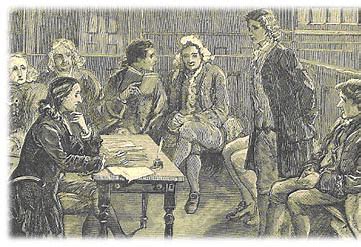
In 1742 John Wesley, actually an ordained Church of England minister, preached a famous sermon standing on his father’s (Samuel Wesley) gravestone in the churchyard of the parish church at Epworth in Lincolnshire, UK. This was the result of being banned from Church of England churches because of some of his ‘non-establishment’ views and his emphasis on ‘making disciples. This fact however might be described as ‘divine intervention’, for it resulted in him becoming the founder of the Methodist Church, which sparked a mighty world-wide revival.
The key to the Methodist revival was Wesley’s establishment of networks of “Class meetings”, groups that were, in effect, cell groups.
Howard A. Snyder, in The Radical Wesley tells us that,
“The Classes normally met one evening each week for an hour or so. Each person reported on his or her spiritual progress, or on particular needs or problems, and received the support and prayers of the others . . . According to one author it was, in fact, in the Class meeting where the great majority of conversions occurred.
The Class meeting system tied together the widely scattered Methodist people and became the sustainer of the Methodist renewal over many decades.
Without the Class meetings, the scattered fires of revival would have burned out long before the movement was able to make a deep impact on the nation. “
Tragically, in time the Methodist believers began to put more of an emphasis on the Sunday morning church meetings in their buildings. As they de-emphasized the accountable relationships they had in their Class meetings, the revival movement began to decline. As it faces the challenge of Pagan mission, that is the very same mistake the institutional western church continues to make.
An Underground Church
About ten years ago I visited a large Chinese city where I was invited to attend a meeting of one of the underground or small group churches. We were taken at night to an upper floor of a large scruffy office building where we entered a very dingy small and cramped room that by day functioned as a printery. Inside there was a circle of about a dozen men and women each with a bible open on their laps. This was a small group ‘church’ happening despite difficult circumstances.
Some in Australia will argue that the church in China is small and so cannot be used as an example for us. This is far from reality for, despite the hazards and threats it faces, the church in China is growing, now estimated at over a 100 million members, some even forecasting that China has the potential to become the largest Christian nation.
My writing about them here is not so much as to praise their inspiring bravery, or their deep passion for Christ no matter what, although both of these were very evident, but to cite them as an example of an effective form of small group church and mission even in a hostile society, indeed ‘Something Completely Different’, something from which the church in Australia and the West can learn a lot.
Quantum Mission Networks
In my book Quantum Mission I have given many and widely varied examples of small group Christian fellowships that are developing in number around the Western world. I don’t intend to repeat them here, but they include ‘churches’ that exist in playgroups, coffee shops, skateboard parks, community centres, clubs, pubs, workplaces, public parks, old warehouses, craft groups and shops – the list goes on and is only limited by our imaginations.
That is the good news, but the not-so-good-news is that in terms of the massive challenge to re-evangelize the West, they are very few and far between.
***
The purpose of this article is to argue that the way forward is for the institutional church of today is to go back and take lessons from the early church and the successful revival movements in church history. This instead of, despite minimal success, clinging Limpet-like to traditional church structures while trying to reach people for Christ with long-failing, ineffective, often expensive church programs and high-tech methodology. This includes the majority of Classic church-plants which are still too expensive and too slow to multiply anywhere near fast enough to meet the existential challenge.
However, the sad reality is that there is little to zero evidence that such a challenge will be taken up by the institutional church, therefore, a new way needs to be forged. This can only be achieved by those who are willing to go back and learn from church history in order to create a fruitful missional future, those who have the vision and passion to develop a small-group movement of some kind to re-evangelize our 21st century society.
Of course, the question is – will it be us?
Discover more from unbounded church
Subscribe to get the latest posts sent to your email.
