
‘‘If you keep on doing what you have been doing, you will keep on getting what you have been getting’
***
This is, with some amendments, an excerpt from-
‘Quantum Mission – Something Completely Different for a Kaleidoscope World’
***
“What the church urgently needs are men and women capable of leading others toward missional transformation for a future church which has not yet been imagined.”
Alan Roxburgh
***
To be effective in mission the Church must travel a road which the western Church has not really done before in terms of its own culture. It is a journey through a pagan land; a churning Kaleidoscope image of alternative micro-cultures; a land for which no road map has been written, indeed we have to write the map as we go. Worse, and here is one of the little grasped key differences with the missional environment of yesteryear, no sooner have we written the map it will need to be re-written. For such a journey the missional vehicles needed will be very different from those emanating from the longstanding Sunday-Centric, In-Drag, Christendom-Form (SIC) church platform. Rather than tinkering with the 20th century ‘Model T Ford’, the 21st century missional challenge requires the development of completely new forms of transport.
Of first importance, the personality profiles and gifting of the Missionary-Leaders required for the development and prosecution of Mission will be very different from those who are currently being selected and trained for the existing, and missionally failing, ‘SIC’ church model. In the light of that, we now turn to consideration of those essential personality and gift profiles in more detail.
‘Entrepreneurial’
‘To live a creative life, we must lose the fear of being wrong’ Joseph L Pearce
The Entrepreneur is prepared to take risks, to seek new directions, seize opportunities to create new things and break new ground. Indeed, they are ‘Star Trek’ leaders who, to paraphrase, are prepared-
‘To boldly go where no ‘Christian Mission’ has gone before’
at least in contemporary western culture.
This is a rare characteristic among current church leaders (godly, faithful, hardworking though they generally are) but one essential for missional success in the rapidly changing cultural flux of the 21st century. Unfortunately, one of the factors militating against missional fruit is the fact that most church leaders are Managers rather than Entrepreneurs, (that is have a Flexative Mindset see below), an essential characteristic for 21st Century local mission. As Michael Moynagh has said-
“Managers work mainly within an organization’s story, which is about ‘who we are and where we have come from, and seek to move the story forward. Entrepreneurs create new stories, which initially describe who they are and what they are trying to do”]
Missionary leaders must ‘create new stories’, but also as ‘Flexative’ thinkers, they will need to adapt to the stories that are thrust upon them by the ever shifting cultural winds blowing from over the horizon.
A point to note is that, while they are desperately needed, it’s often not much fun being an entrepreneur in ‘Sunday Centric, In-Drag (into Sunday services), Christendom-form’ church circles, because they challenge the status quo, like prophets!
Flexative
‘It’s not the strongest of species that survive, nor the most intelligent, but the most responsive to change’
Charles Darwin
First – Formulaic Leadership
***
In terms of missional leadership there are two very different approaches that can be taken. They are ‘Formulaic’; a term I use to describe the traditional leadership of the ‘SIC’ Church model and its missional strategies, and ‘Flexative’; a’ term I have coined to describe the type of leadership and leaders required for the current missional challenge.
Formulaic thinking about local mission is the mindset that is controlled by following formulae. Formulaic thinking generally follows a formula as to where and when the ‘church’ meets, i.e. in a purpose built, or rented building; follows a formula for what is done in the ‘meeting’, i.e. the ’Liturgy’ whether written or assumed; implements outreach programs (formulae) for mission that are almost always imported from somewhere else, even overseas, where they were alleged to have been ‘a great success’.
Formulaic leadership assumes that the future has a significant degree of fixity and so is predictable, this largely based on what has happened, and how things were done, in the past.
Formulaic thinkers start with a fixed ‘End’ in mind (e.g. a Classic church plant), set in a predictable and fixed future physical-cultural context. Then they use a set formula to achieve that ‘End’, usually by a formula they or someone else has used before.
The example of the Church Plant usually follows a well tried formula that goes something like this – gather a planter and planting team, build, rent or buy a fixed facility; in a fixed place where a fairly fixed model of ‘church’ and ‘church’ style is established; which will operate at a fairly fixed time, usually on Sundays or at least weekends. The formula includes the gathering of the resources needed to enact it, i.e. funds, personnel, property etc.
Second – Flexative Leadership
In contrast, ‘Flexative’ thinking[2] is a form of reasoning or problem solving which assumes the future is largely unpredictable (a very relevant ‘Truth’ in our times), but when we arrive there, it can to a significant extent be controlled through human action. To put it another way, it is about adapting to and managing whatever cultural context ‘turns up’ and whenever it does so.
Flexative thinkers start with the resources available and set out on a journey where the ‘End’ (even Ends) is not necessarily pre-determined and indeed may in fact vary, or it can even be that new ‘Ends’ appear along the way.
The Flexative thinking leader starts with asking the question ‘where do the lost, the neo-pagan members of society already regularly gather?’ Having determined the answer to that question (which may be a pub, workplace, Café, Playgroup, Club, community centre, park, interest group etc) they then say, ‘Then let’s go there!’ and do what is necessary to create or shape a Missional Community in that location or activity.
Flexative leadership, as the word itself indicates, is highly flexible, and so will be fully prepared to adopt Paul’s attitude to –
‘Become ALL things to ALL people so that by ALL possible means I might save some’. 1 Corinthians 9:22
That is a verse that is the essence of the Quantum Mission strategy. However, tragically it appears as though it is not in the Bibles used in many churches. I would suggest that this is because Formulaic thinking, with the limitations applied by its emphasis on ‘formulae’ doesn’t allow for ALL! (Upper case letters are the author’s emphasis)
***
The Flexation mindset can best be illustrated by several basic principles-
- The Bird in Hand Principle
‘Flexative Thinkers’ start where they are and with what they have. As an illustration, if a cook were to act Flexatively, he or she would concoct an unknown dish with whatever ingredients were already available in the kitchen pantry, not follow a known recipe for what he/she wanted to make.[3] Whereas the ‘Formulaic thinker’ decides in advance what they want to make then, generally following a previously used recipe (formula), or ‘what we or others have done before’, goes and gathers the required ingredients.
The ‘Flexative thinker’ says ‘Start with what you have’ instead of waiting for the perfect conditions to arrive. This may be for example, a bunch of Christians who have five dollars each for a coffee and are willing to meet at the same time each week in a local Coffee Shop (something every Christian could easily do, but the numbers who will is vanishingly small).
It can also use an existing activity. Some examples are- a Playgroup, Self-Defence Class, Skateboard group, Craft group etc. that may be turned into a Missional Community. These are examples of using already existing activities where many unchurched and de-churched people already attend and converting them into Missional Communities.
All this is in stark contrast to ‘Formulaic’ missional thinking which will seek to garner new, usually expensive, resources to create what does not yet exist, e.g. a Church plant. Whereas the ‘Flexative’ thinker just asks the question what resources already lie at hand (including available venues) that I can use to create or form into a Missional Community?
2. The Lemonade Principle
There is a saying that ‘If life deals you lemons, make lemonade’. Applied to mission, this principle describes Flexative thinking that will be willing to exploit whatever resources are available and the opportunities that turn up, whenever they do so and however unexpected they may be. This characteristic is a combination of entrepreneurship, opportunism, creativity, and especially adaptability. Sadly, these attributes are not generally found in any abundance in contemporary church leaderships.
3. The ‘Lego’ Principle
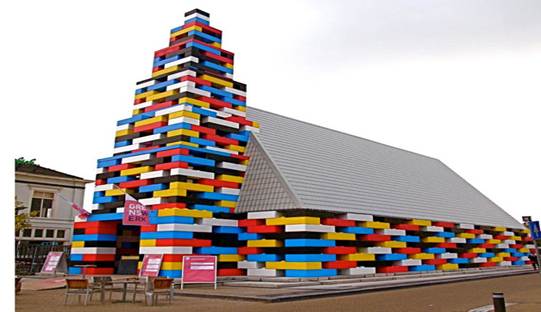
This is the key mindset needed for the unpredictable, successive waves of cultural change rolling towards us on our missional journey into the neo-pagan micro-cultures of 21st century western society. It requires that the missional vehicles are constructed from something like a ‘Lego’ set. That is, the vehicles initially constructed for mission can be broken up and reconstructed into new forms as often as changing cultural contexts require. Such change-readiness makes it essential that the ‘MCs’ created must be both small and very low cost.
This way of thinking and strategising for mission to Australian society is as far distant from current Formulaic ‘SIC’ platform strategies as can possibly be, where a planned-for ‘End’ is determined at the beginning of the process. An example of this is the fixed model Classic church plant in a fixed place, with a fixed style for a fixed cultural context, which generally meets at a fixed time.
In contrast, the ‘Lego Mission’ mindset is one where the strategy is just to start something with the resources available (what’s in the pantry) and the ‘End’ (better ‘Ends’) will emerge through a process of ongoing ‘Lego’ reconstruction. Indeed, this is a ‘let’s see what works’ and a ‘making it up as you go along’, then ‘making it up again’, approach.
‘Flexative Mission’ is really a journey of continuing experimentation and vision modification that exploits opportunities as they appear over the horizon and has the capacity to reinvent itself as the cultural context changes or other changed circumstances occur. Tragically, it is also a process for which (often through no fault of their own) very few current church leaders are selected, psychologically suited, gifted or trained.
I am acutely aware that the above analysis and proposals will be extremely unpopular with many congregational members and leaders. However, I believe that it is time to be unpopular for the sake of the Lost. For I am firmly convinced that if there is to be any prospect of reversing the longstanding, well documented, dismal missional performance of local churches then nothing less than a break away from the ‘SIC’ church model, especially in terms of the neo-pagan mission to Australian society, is required.
Tragically, this issue, the Biggest Elephant in the Mission Operations room continues to be largely unaddressed. Meanwhile decline continues and the ‘Iceberg’ gets closer- for-
‘It’s more missionaries we need, without more missionaries we will lose’.[4]
Star Trek Visionaries -Flexible and Innovative
Rather than having a rigidly planned approach to mission, Missionary-Leaders must be willing to adapt to the changing cultural contexts thrust upon them and invent new strategies as those contexts change, and quickly if necessary. This means not just being able to think outside of the box but to get outside of the box.
Such Missionary-Leaders will have what might be termed a ‘Star Trek’ mentality, meaning a preparedness to go where ‘no church’ has gone before’. That is into the culturally distant, alien and Christian-hostile socio-spiritual micro-cultures orbiting where the light of the ‘Son’ is but a distant flicker, yet which are the places where modern Australians (Westerners) ‘Live, Work and Play’.
Such characteristics are not commonly associated with either ‘SIC’ church mission platforms or ‘Classic’ Church-Planting strategies.
Unfortunately, despite being for the most part godly, faithful, hardworking people who desire to save the lost, the majority of the current cohort of church leaders do not have the personalities for, are not gifted or trained for, the requirements of the current missional challenge which is – Pagan Mission, a challenge the western church has not faced in its own culture for 1500 years, and one it steadfastly refuses to acknowledge.
It deeply pains me to say, as someone who has been involved in local mission for decades, that nearly all current evangelistic activities of churches, INCLUDING most church plants, are anachronistic, lack cultural intelligence and are no longer fit for western society.
[1] Moynagh, Church in Life; p.68
[2] ‘Flexation’ is my, what I think is a more helpful, substitute term for the concept of ‘Effectuation’ which is sometimes used but difficult to understand.
[3] The bird in hand principle or “making do with resources at hand” was first introduced by Levi-Strauss in 1967 specifically in the context of Arts, Crafts and Science.
[4] A paraphrase of Air Chief Marshall Dowding’s comment on the need for more Pilots during the WW 2 Battle of Britain.
Discover more from unbounded church
Subscribe to get the latest posts sent to your email.
